12 guides
Guides
How memory, attention and habits work, what the research says, and how to use it in the few minutes you have. Every figure links to its source.
Apps to replace doomscrolling, by how they work
Learning feeds, app blockers and reading apps that stand in for a social feed, compared on how they work and US price on October 17, 2026, plus the catch with streaks.
The best microlearning apps in 2026, compared
Eight microlearning apps for adults compared on lesson length, quizzes, free plans and US App Store prices, checked October 17, 2026. Scroll is ours.
Is there a Duolingo for general knowledge?
Apps that use Duolingo's short lessons, quizzes and streaks for history, science and psychology, compared on lesson length, checks and US price on October 17, 2026.
What the forgetting curve shows, and what to do about it
Ebbinghaus's forgetting curve from his own data and a 2015 replication: what 'savings' measures, how fast we forget, and what spaced reviews and self-testing add.
How long does it take to form a habit?
In the best-known study, new daily habits took about 66 days on average, with a range of 18 to 254. Where the 21-day figure came from, and what helps.
How to fix brain rot, and what the term means
Brain rot was Oxford's 2024 Word of the Year. What the term means, what research on short video and attention does and doesn't show, and a 14-day reset.
How to improve attention span, according to the research
The popular 8-second figure has no research behind it. What Gloria Mark's 47 seconds measures, what short-video studies found, and changes worth testing.
How to remember what you read
Recall a chapter before you reread it, write one sentence from memory and review it days later. What the reading research supports, and why highlighting rates low.
How to stop doomscrolling, and what to do instead
A swap-based plan to stop doomscrolling: change the cue and the replacement, add friction with iPhone and Android settings, and track it all in a 7-day log.
How to learn something new every day in 5 minutes
A five-minute daily routine: read one short explainer, answer a question on it, review it three days later. Includes a 30-day plan across eight topics, app optional.
What is microlearning? Definition, examples and evidence
Microlearning means learning in units of a few minutes or less. Real examples, what studies of quizzing and spacing support, and when a short lesson is the wrong tool.
Your next scroll could teach you something.
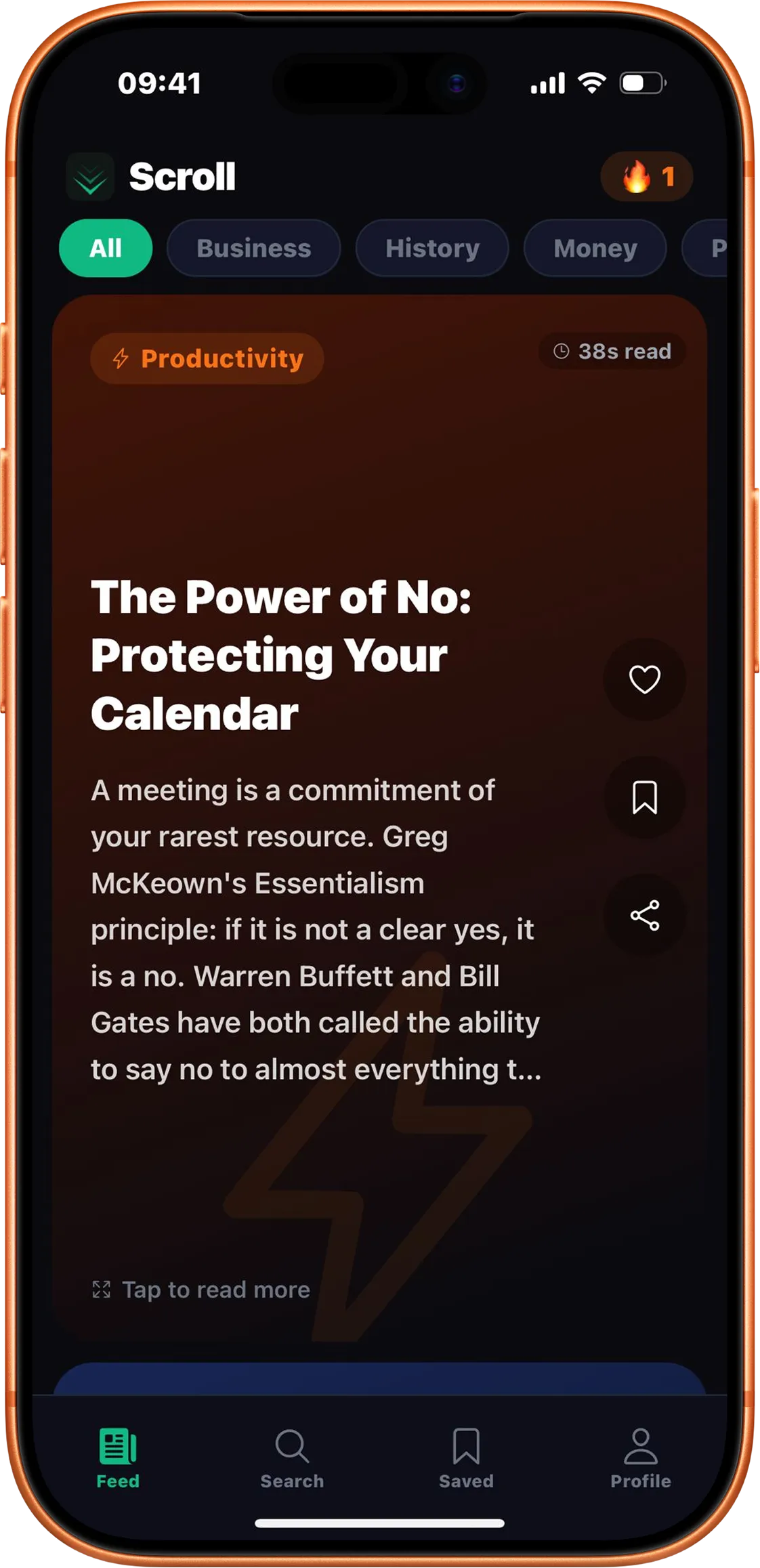
Install Scroll free on iPhone or Android. 5 lessons a day cost nothing, and each takes about a minute.

On a computer?Point your phone's camera here to open the right store.